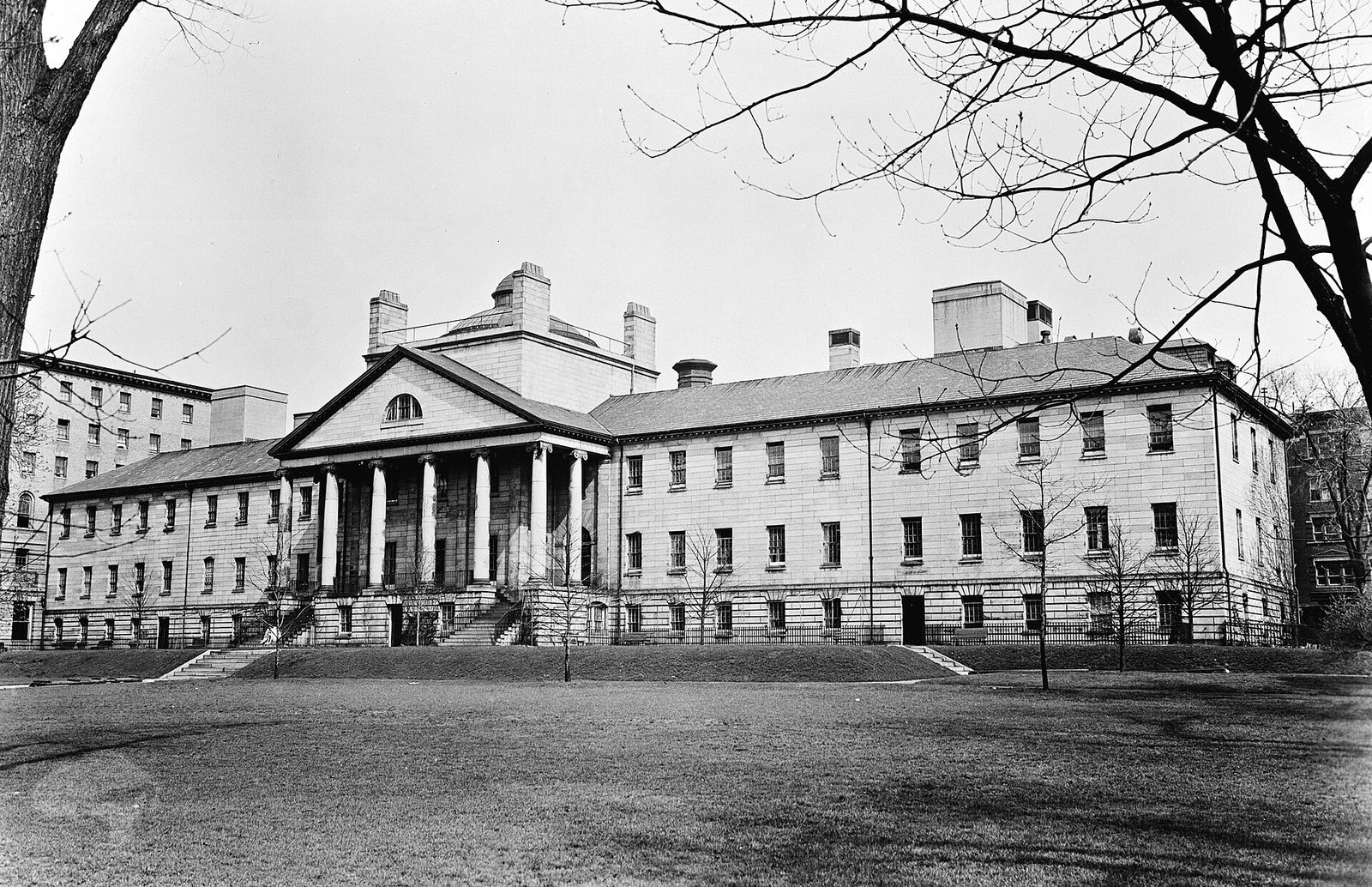
Between 2006 and 2009, researchers at Massachusetts General Hospital, a granite complex on the bank of the Charles River that has been treating patients since 1821, enrolled 151 people with stage IV lung cancer in a trial. All were terminally ill. All would die. The question was not whether to treat them. The question was how.1
Half received standard oncology care. The other half received the same oncology care plus one addition: a palliative care specialist who met with them at least once a month. Not instead of their oncologist. Alongside. The specialist did not administer drugs. Did not perform procedures. The specialist asked questions. What mattered to the patient. What they understood about their illness. What they wanted the remaining time to look like.
The palliative care group stopped chemotherapy sooner. Entered hospice earlier. Reported better quality of life. Were less than half as likely to be clinically depressed at twelve weeks. Sixteen percent versus thirty-eight.2
They also lived longer.
Palliative care group
Standard oncology care
Two point seven months. Thirty percent. Less treatment. Better quality of life. Longer life. All three.3
The intervention was a conversation. Someone sat with them and asked what they wanted. The answer changed what happened next. The patients who were asked chose less aggressive treatment. The patients who were not asked received the system's default. The default was more.

Being Mortal: Medicine and What Matters in the End | Atul Gawande | Talks at Google
Talks at Google
The study was small. A single institution. The survival finding was a secondary outcome the trial was not designed to detect, and subsequent larger studies have not confirmed it in pooled analysis. What has been confirmed, across twenty-four randomized trials and multiple meta-analyses, is the quality of life improvement. Less suffering. Less anxiety. Less aggressive care at the end. The conversation does not reliably extend life. It reliably makes the remaining life better.4
That should have been enough to change the system. It did not. But then, this finding has been available for longer than anyone in that hospital has been alive.
The ward
In 1847, a Hungarian physician named Ignaz Semmelweis noticed something in the maternity ward data at the Vienna General Hospital. The clinic staffed by medical students had a maternal death rate of roughly ten percent. The clinic staffed by midwives ran closer to four. The difference was a single practice: the medical students went directly from performing autopsies to delivering babies. Semmelweis introduced handwashing with chlorinated lime. Maternal mortality fell to roughly one percent.5
The medical establishment rejected the finding. The implication that the doctor's hands carried death was an insult to professional standing. Semmelweis was dismissed, spent a decade publishing data nobody wanted to read, and died in an asylum at forty-seven.5 The mechanism he identified, that the system's default was causing harm, would take another twenty years to be accepted. By then the women he could have saved were dead.
One hundred and sixty-three years later, a trial at Massachusetts General proved the same structural finding in a different ward. Less treatment. Better outcome. The system has not fully absorbed it now.
The default
The last time you went to the doctor, the appointment lasted roughly fifteen minutes. The average primary care visit in the United States runs thirteen to sixteen minutes.6 In that time, the doctor reviewed your chart, asked about symptoms, ordered tests, wrote prescriptions, and moved on. Nobody asked what mattered to you. Nobody needed to. You had a sore throat.
But the fifteen-minute structure is the same structure that operates when the diagnosis is terminal. The system that is adequate for a sore throat is the system that fails when the question stops being how do I fix this and becomes how do I live. The system does not switch modes. It was not designed to. It was designed to do something. The training, the culture, the legal environment, the payment structure. Everything points in one direction.
Fourteen years
Medical school teaches diagnosis and treatment. Fourteen years of training, the bulk of it structured around identifying the problem and intervening. Fewer than one-third of physicians report any formal training in end-of-life discussions.7 The curriculum does not include when to stop. It teaches what to do.
The war
Patients fight. Tumors invade. Treatments attack. Survivors are warriors. The dead lost their battle. Nixon signed the National Cancer Act in 1971 and called it a war. In 1978, Susan Sontag argued the metaphor was doing damage. The language did not change.8
A team at Lancaster University built a 1.5-million-word corpus from the language of cancer, drawing on patient interviews, online forums, and clinical exchanges. Violence metaphors were everywhere in it. Then they found something the language itself could not settle. The same words that gave one patient strength left another feeling like a failure. A smaller study at Duke in 2022 heard the split by stage. Every patient whose cancer had not spread used war metaphors and said they helped. The only patients who did not use them had metastatic disease, and they said the language was unhelpful because they had no control over how it would end. When the disease was incurable, when there was no winning, the language of fighting offered no vocabulary for acceptance, for comfort, for a death that could be something other than a defeat.9
For some patients, the language fails exactly when they need it most.
Standard of care
A doctor who treats aggressively and the patient dies followed standard of care. A doctor who does not treat aggressively can be sued for negligence. The legal incentive runs in one direction. Doctors who intervene are defended by the protocol. Doctors who watch and wait are exposed.
The result is defensive medicine. Tests ordered not because the doctor believes the patient needs them but because not ordering them creates legal exposure. In a 2017 survey of over two thousand physicians published in PLOS ONE, eighty-five percent cited fear of malpractice as a reason for overtreatment, the most common answer. They estimated that roughly one-fifth of all medical care was unnecessary. The most rigorous cost estimate, from a Harvard study co-authored by the same surgeon who wrote the book on dying, put the defensive medicine bill at $45.6 billion a year. That was 2008 dollars. The number has not shrunk. The average of the fifty largest malpractice verdicts rose seventy-five percent between 2022 and 2024.10
The doctor making the recommendation believes, on some level, that the test is justified. The question is whether the recommendation would be the same if the doctor could not be sued. In most cases, the doctor knows it would not.
No billing code
The system has nearly seventy thousand diagnosis codes. It can bill for a lesion on your left pinky finger. Until January 1, 2016, it had zero codes for asking what you wanted.11 For the entire history of modern American medicine until 2016, the system had no mechanism to pay for the conversation that the Mass General trial proved was the intervention.
The codes exist now. In 2026, Medicare paid about $87 for an advance care planning conversation that runs anywhere from sixteen to forty-five minutes. The second code only starts at minute forty-six. A forty-five-minute conversation about how a patient wants to spend their remaining time pays roughly $87.12
A twenty-minute colonoscopy pays the physician roughly $165.13
conversation
colonoscopy
The system pays roughly three to four times as much per minute for looking inside someone's body as for asking them what they want done with it. The payment is the clearest signal the system sends about what it values. Insurance reimburses procedures at rates that fund practices. It reimburses conversations at rates that fund compliance. A practice built on conversations cannot survive. A practice built on procedures can.
Over forty percent of oncologists acknowledge offering treatments they believe are unlikely to work.14 Not because they are dishonest. Because the system around them, the training, the culture, the legal exposure, the payment structure, points in one direction. Doing something is reimbursed. Doing something is defensible in court. Doing something matches the language of fighting and battling and not giving up. Not doing something, watching, waiting, asking, listening, is none of these things.
The bell curve
Even within this system, the assumption is that the care is roughly the same everywhere. A doctor in Cincinnati. A doctor in Minneapolis. Same disease. Same medical knowledge. Same protocols. The patient assumes competence. The patient assumes uniformity. The data says something else.
In cystic fibrosis, 117 accredited centers in the United States follow the same guidelines, undergo the same certification, participate in the same research. You would expect the outcomes to be similar. In 1997, at the average center, patients lived to thirty. At the best center, patients lived to forty-six.15
Best CF center
Average CF center
Sixteen years. Same disease. Same medical knowledge. Same protocols available to every center. The difference was not what the doctors knew. It was intensity. Aggressiveness about marginal improvement. Refusal to accept a lung function reading that was good enough.
Cincinnati Children's Hospital, among the most respected pediatric hospitals in the country, had lung function results for children under twelve in the bottom twenty-five percent. Not a rural clinic with limited resources. A flagship institution. The bell curve was invisible to the families who brought their children there. The system did not tell them where their center ranked. In many cases the system did not know, or if it knew, it did not publish.16
Warren Warwick ran the CF center at the University of Minnesota. He had been doing it for decades. His patients lived longer than patients at almost every other center in the country. The reason was not a breakthrough treatment or better funding. It was how he used the exam room. When a patient came in with a lung function reading at ninety-five percent, the textbook said normal. Warwick would lean in and say: that is not your normal. Your normal is a hundred. Let us figure out why you are at ninety-five. He would sit with the patient and adjust, tweak, refuse to accept the number the guideline said was fine. He called national clinical guidelines "a record of the past, and little more." He said they should have an expiration date.17
What Warwick did was expensive in time and attention, not in money. It was the opposite of the fifteen-minute visit. He treated the patient in front of him, not the protocol on the chart. Most doctors do not do this. Most doctors follow the protocol, deliver the standard of care, produce the average result. The average result, for most conditions, is adequate. Nobody dies from an adequate flu diagnosis. But for cystic fibrosis the gap between average and the doctor who refused to accept average was sixteen years of living.
The patient does not know where on the bell curve their doctor falls. The system does not tell them. The system barely knows.
After the Cystic Fibrosis Foundation began publishing center-level outcome data, something unexpected happened. The gap between the best and the average did not close. It widened. The top centers improved fastest. They had, above all else, a capacity to learn and change, and to do it faster than everyone else. The transparency helped. But it helped the best more than it helped the rest.18
The question
Sara Thomas Monopoli was thirty-four and pregnant when she was diagnosed with stage IV lung cancer. She had never smoked. Over the following months she went through one treatment after another, each less likely to work than the last. She had told her family she did not want hospitals or ICUs at the end. She was admitted to the hospital again with pneumonia, struggling to breathe, and only then did her primary care doctor sit down with the family and settle what she wanted. No breathing machine. A small dose of morphine eased her breathing, and she died in her hospital room with her husband beside her. Gawande, whose hospital treated her, later wrote that almost nothing done to her in the previous three months had likely achieved anything except to make her worse.19
When someone finally asks, the answers are not clinical. They are human. One man wanted to eat chocolate ice cream and watch football on television. One woman wanted to be well enough to attend a wedding. These are not treatment goals. They are life goals. No protocol captures them. No diagnosis code contains them. No billing system reimburses the conversation that surfaces them.20
If the diagnosis were yours, you would have answers like these. Specific. Personal. Nothing the system could generate from your chart. The system knows your blood pressure, your lab work, your imaging. It does not know what you would trade six months for. It does not know what you would refuse. It does not know what would make the remaining time feel like yours. That knowledge lives in you and nowhere else, and the system has no mechanism to ask for it.
Seventy-one percent of Americans say they would prefer to die at home. Nine percent prefer a hospital.21
In 2017, 29.8 percent of Americans died in hospitals. Down from 39.7 percent in 2003. The number is moving in the right direction. It is still not close to what people say they want.22
In a 2012 survey of Californians, eighty percent said they would want to talk to their doctor about end-of-life wishes if they were seriously ill. Seven percent had actually had that conversation.23 Nationally, in 2016, only eleven percent of Americans had ever discussed end-of-life wishes with a doctor at all. Not eleven percent of the terminally ill. Eleven percent of everyone. The conversation that the Mass General trial proved was the most effective intervention available for dying patients happens almost never.
In 1995, the largest study of dying in American hospitals followed 9,105 adults across five teaching hospitals. Nearly half of them died within six months. The findings, published in JAMA, were blunt. Only forty-seven percent of physicians knew when their patients preferred to avoid CPR. Forty-six percent of do-not-resuscitate orders were written within two days of death. Thirty-eight percent of patients who died spent ten or more days in an ICU, in a coma, or on a ventilator. Half of conscious patients who died had families who reported moderate-to-severe pain at least half the time.24
That study was published in 1995. The system has not fundamentally changed.
In 2012, the New England Journal of Medicine published a study of 1,193 patients with metastatic cancer. Sixty-nine percent of those with lung cancer and eighty-one percent of those with colorectal cancer did not understand that chemotherapy was not at all likely to cure their disease.25
The patients were being treated for a terminal illness. Most of them did not know their treatment could not cure them.
The oncologist did not lie. The oncologist presented the treatment options. The patient heard options and inferred hope. The system's language, its culture of fighting, its reimbursement of intervention, its legal bias toward action, all of it created a context in which the patient understood "we can try this treatment" as "this treatment might save me." Nobody corrected the inference because correcting it requires a conversation the system does not pay for, does not train doctors to have, and does not protect doctors who attempt it.
When someone does ask the question, the answer changes everything. The patients in the Mass General trial who received palliative care were less likely to receive aggressive end-of-life treatment. Thirty-three percent versus fifty-four. They entered hospice with a median of eleven days remaining, not four. They had documented their resuscitation preferences. Fifty-three percent versus twenty-eight. The conversation did not give them different medical options. It gave them the information to choose among the options that already existed.26
The intervention was a question and the patience to hear the answer.
The counter-case
Medicine also produced the strongest example of measurement working exactly as intended.
In 2009, the World Health Organization published the results of a surgical safety checklist tested across eight hospitals on five continents. Nineteen items. Three pause points. Two minutes. Before anesthesia: confirm the patient. Before incision: confirm the site. Before the patient leaves: confirm the count. The rate of major complications fell thirty-six percent. Deaths fell forty-seven percent.27
The checklist did not measure whether the patient survived. It measured whether the team communicated. It measured the preconditions for good outcomes, not the outcomes themselves. The distinction matters. When measurement is upstream of the outcome, when it tracks the process rather than the result, it works. The Apgar score transformed obstetrics. The checklist transformed surgery. Both measured the right thing.
The survival metric in end-of-life care measures the wrong thing. It counts days alive. The patients it is measuring want something else. The system optimized for survival so thoroughly that, in the Mass General trial, the patients who received less treatment lived longer. The metric did not merely replace the thing it was supposed to represent. It degraded it.
The same doctor who invented the checklist wrote the book about dying. He held both truths at the same time. Measurement saves lives. And measurement, pointed at the wrong thing, can destroy them.28
The strongest counterargument is that the system works. For most visits, it does. You break your arm. The system sets it. You have an infection. The system treats it. The training is real. The expertise is real. For problems that are acute, identifiable, and fixable, the system's bias toward action is the right bias. Nobody wants a doctor who watches and waits while a bone heals crooked.
The problem is not the system's capacity. It is the system's default. The default is more. More tests. More treatment. More intervention. And for most visits, the default and the patient's interest align closely enough that nobody notices. The arm gets set. The infection clears. The patient goes home.
For the visit that matters most, the one where the question is not how do I survive but how do I live, the default and the patient's need point in opposite directions. The data says less treatment produces a better outcome. The system defaults to more. The patient receives aggressive care not because the doctor concluded that aggressive care was best but because the insurance covers it, the metrics incentivize it, the legal environment protects it, the payment structure rewards it, and the training produced a physician who knows how to do it. All of that was in place before the patient entered the room.29
The cost of this default is not paid by the system. It is paid by the person in the bed. A 2008 study found that terminally ill patients who received the most aggressive interventions, ventilators, defibrillation, chest compressions, ICU admission near death, had a substantially worse quality of life in their last week. Their caregivers were three times as likely to suffer major depression six months later.30 The cost is invisible to the system because the system measures survival, not suffering. The patient who dies in the ICU after four rounds of chemotherapy is, by the system's metrics, a patient who received the full standard of care.
One economist had a name for this structure. When the person making the decision does not bear the cost of being wrong, the decision does not self-correct. The doctor who over-treats bears no cost from the unnecessary test. The patient bears no visible cost because insurance covers it. The insurer bears the cost and distributes it across all premiums. The cost is socialized. The decision is individual. Nobody in the chain is the residual claimant of the patient's actual wellbeing.31 The structure is not unique to medicine. It operates wherever the person making the decision is insulated from the consequence of being wrong. Medicine is where you feel it in your body.
Hospice, when patients finally arrive, had a median stay of eighteen days in 2022. In 2024, one in five Medicare hospice patients stayed four days or fewer. In one study of twelve hospices, one in six cancer patients entered hospice in their final three days of life.32 The system does not deny hospice. It delays the conversation that leads to it. By the time the conversation happens, the remaining time is measured in days, not months. The palliative care group in the Mass General trial entered hospice with eleven days remaining. The standard care group entered with four. Both numbers are small. One of them is three times larger than the other.
You went to the doctor. The doctor examined you. The doctor recommended a treatment. You did what the doctor said. The expertise was real. The recommendation was real.
The system that shaped the recommendation was also real. And it was in place before you entered the room.
Notes
- Temel JS, Greer JA, Muzikansky A, et al. "Early Palliative Care for Patients with Metastatic Non-Small-Cell Lung Cancer." New England Journal of Medicine. 2010;363(8):733-742. 151 patients randomized: 77 palliative care, 74 standard care. All stage IV NSCLC. Single-institution, nonblinded RCT at Massachusetts General Hospital. ↩
- Quality of life measured by FACT-L (Functional Assessment of Cancer Therapy-Lung) and TOI (Trial Outcome Index). At 12 weeks: FACT-L 98.0 vs 91.5, P=0.03. TOI 59.0 vs 53.0, P=0.009. Depression (HADS-D): 16% vs 38%, P=0.01. Major depression (PHQ-9): 4% vs 17%, P=0.04. ↩
- Median survival: 11.6 months (palliative care) vs 8.9 months (standard care), P=0.02. Difference of 2.7 months. Survival was a secondary endpoint the trial was not powered to detect. ↩
- Cochrane systematic review (Haun et al., 2017): 7 RCTs, 1,614 participants. QoL: SMD 0.27, P significant. Survival: HR 0.85, 95% CI 0.56-1.28, not significant. BMC Palliative Care meta-analysis (2025): 24 RCTs. QoL significantly improved, P=0.0004. Anxiety significantly reduced, P=0.002. Depression: no significant pooled reduction (SMD -0.15, P=0.14), though the long-term subgroup showed one; Cochrane 2017 also found no significant difference in depression. ASCO 2024 guideline update: strong recommendation for early palliative care integration based on 52 studies (2015-2023). ↩
- Semmelweis IP. Die Aetiologie, der Begriff und die Prophylaxis des Kindbettfiebers (1861). Vienna General Hospital maternity wards, 1841-1847. First Clinic mortality ~10% (medical students performing autopsies). Second Clinic ~4% (midwives). After chlorinated lime handwashing (May 1847), First Clinic fell to ~1%. Semmelweis dismissed 1849, published 1861, committed to asylum 1865, died within two weeks at 47. Germ theory established by Pasteur (1860s) and Lister (1867) after his death. ↩ ↩
- Average US primary care visit: 13-16 minutes. Tai-Seale M, McGuire TG, Zhang W. "Time Allocation in Primary Care Office Visits." Health Services Research. 2007;42(5):1871-1894. Updated estimates (2018-2024) range from 15.3 to 18.3 minutes depending on methodology. Yarnall KS et al. Annals of Family Medicine. 2003: estimated 7.4 hours/day needed to deliver recommended preventive care alone. ↩
- Physician training in EOL discussions: multiple surveys report fewer than one-third of physicians received formal training. See Buss MK et al., "A Study of Oncology Fellows' Training in End-of-Life Care," Journal of Supportive Oncology, 2007;5(5):237-242; Sullivan AM, Lakoma MD, Block SD, "The Status of Medical Education in End-of-Life Care: A National Report," Journal of General Internal Medicine, 2003;18(9):685-695. Also: Mack JW, Smith TJ. "Reasons Why Physicians Do Not Have Discussions About Poor Prognosis," Journal of Clinical Oncology, 2012. ↩
- Nixon signed the National Cancer Act (December 23, 1971). Sontag, Illness as Metaphor (1978). Thomas Sydenham first introduced military language into Western medical writing in the mid-1600s. ↩
- Semino E, Demjén Z, Hardie A, Payne S, Rayson P. Metaphor, Cancer and the End of Life: A Corpus-Based Study. Routledge, 2018. 1.5-million-word corpus. See also Semino E et al., "The online use of Violence and Journey metaphors by patients with cancer," BMJ Supportive & Palliative Care, 2017;7(1):60-66: Violence metaphors "can express and reinforce negative feelings, but they can also be used in empowering ways." Bodd MH, Daniels NC, Amonoo HL, Tate T, Herring KW, LeBlanc TW, ""More than conquerors": a qualitative analysis of war metaphors for patients with cancer," Supportive Care in Cancer, 2022 (15 patients, Duke Cancer Center). The Duke authors concluded the war metaphor "should remain an integral part of cancer care." Hauser & Schwarz, University of Michigan: combat framing reduced likelihood of adopting prevention behaviors. ↩
- Lyu H, Xu T, Brotman D, et al. "Overtreatment in the United States." PLOS ONE. 2017;12(9):e0181970. 2,106 physicians: 84.7% cited malpractice fear as a reason for overtreatment, the most common answer (respondents could name more than one). Estimated 20.6% of medical care unnecessary. Mello MM, Chandra A, Gawande AA, Studdert DM. "National Costs of the Medical Liability System." Health Affairs. 2010;29(9):1569-1577. Total liability system cost: $55.6 billion (2.4% of healthcare spending). Defensive medicine: $45.6 billion. Average top-50 malpractice verdicts: $32M (2022), $48M (2023), $56M (2024). Source: Moore Actuarial Consulting / The Doctors Company. ↩
- CMS CY 2016 Physician Fee Schedule final rule. CPT codes 99497 and 99498 (Advance Care Planning) first became billable under Medicare on January 1, 2016. ↩
- CPT 99497 (advance care planning, billable from 16 to 45 minutes): 2.60 non-facility RVUs x CY 2026 conversion factor $33.4009 = $86.84, national rate before geographic adjustment. CPT 99498 (each additional 30 minutes) is billable only from minute 46 ($78.16). A 45-minute conversation bills 99497 alone. Sources: CMS Physician Fee Schedule Relative Value File RVU26D (Aug 2026); CMS MLN Fact Sheet MLN909289, March 2026, Table 2. ↩
- Colonoscopy physician professional fee, CPT 45378 (diagnostic) or G0121 (screening), performed in a hospital or surgery center: 4.93 facility RVUs x CY 2026 conversion factor $33.4009 = $164.67 (G0121, $165.00), national rate before geographic adjustment. The facility bills its own fee on top. Source: CMS Physician Fee Schedule Relative Value File RVU26D (Aug 2026). The CY 2025 rate was $177.26. ↩
- Gawande, Being Mortal (2014). Doctors overestimate survival by an average of 530%. Over 40% of oncologists admit to offering treatments they believe are unlikely to work. ↩
- Gawande, Better (2007). Cystic Fibrosis Foundation registry data, 1997. 117 accredited CF centers. Life expectancy at average center: 30 years. Best center: 46 years. ↩
- Gawande, Better. Cincinnati Children's Hospital lung function data for patients under 12: bottom 25% nationally despite institutional reputation. ↩
- Warren Warwick, University of Minnesota CF Center. "National clinical guidelines for care are a record of the past, and little more. They should have an expiration date." Gawande, Better. ↩
- Gawande, Better. After the CF Foundation published center-level outcome data: "You look at the rates of improvement in different quartiles, and it's the centers in the top quartile that are improving fastest. They are at risk of breaking away." ↩
- Gawande, Being Mortal (2014). Sara Thomas Monopoli, chapter "Letting Go." Diagnosed with lung cancer already spread to the lining of her chest at 34, thirty-nine weeks pregnant. Admitted with pneumonia; her family agreed to no ventilation, palliative care gave morphine, and she died in her hospital room. ↩
- Gawande, Being Mortal, chapters "Letting Go" and "Courage." Susan Block's father, before spinal surgery: "if I'm able to eat chocolate ice cream and watch football on TV, then I'm willing to stay alive." Jewel Douglass, seventy-two, with metastatic ovarian cancer: "uppermost in her mind was a wedding that weekend that she was desperate not to miss." ↩
- Kaiser Family Foundation (KFF) polling on end-of-life preferences. 71% prefer to die at home. ↩
- Cross SH, Warraich HJ. "Changes in the Place of Death in the United States." New England Journal of Medicine. 2019. Hospital deaths: 39.7% (2003) to 29.8% (2017). ↩
- 80% and 7%: Survey of Californians by the California HealthCare Foundation (2012), as reported in The Conversation Project Starter Kit. 11%: Kaiser Family Foundation and The Economist, "Views and Experiences with End-of-Life Medical Care in the U.S.," April 2017 (survey fielded 2016). ↩
- The SUPPORT Principal Investigators. "A Controlled Trial to Improve Care for Seriously Ill Hospitalized Patients." JAMA. 1995;274(20):1591-1598. 9,105 adults, five teaching hospitals. ↩
- Weeks JC, Catalano PJ, Cronin A, et al. "Patients' Expectations about Effects of Chemotherapy for Advanced Cancer." New England Journal of Medicine. 2012;367(17):1616-1625. 1,193 patients, CanCORS study. ↩
- Temel et al. (2010). Aggressive EOL care: 33% (palliative) vs 54% (standard), P=0.05. Documented resuscitation preferences: 53% vs 28%, P=0.05. Median hospice days: 11 vs 4. ↩
- Gawande A. The Checklist Manifesto (2009). WHO Surgical Safety Checklist trial: 8 hospitals in Toronto, New Delhi, Amman, Auckland, Manila, Ifakara, London and Seattle, 7,688 patients (3,733 before checklist, 3,955 after). Major complications fell 36%. Deaths fell 47%. ↩
- Gawande is the author of both The Checklist Manifesto (2009, when measurement works) and Being Mortal (2014, when measurement destroys). The tension between these two books is the clearest articulation of the distinction in the literature. ↩
- Scott JC. Seeing Like a State (1998). Scott's central argument: institutions simplify complex realities into measurable categories. The simplifications serve administrative needs but destroy the local, practical knowledge that made the original systems work. ICD-10-CM contains approximately 69,000+ diagnosis codes. The coding system makes the patient legible to the institution. It does not make the patient visible. ↩
- Wright AA, Zhang B, Ray A, et al. "Associations Between End-of-Life Discussions, Patient Mental Health, Medical Care Near Death, and Caregiver Bereavement Adjustment." JAMA. 2008;300(14):1665-1673. Coping with Cancer study. ↩
- Sowell T. Knowledge and Decisions (1980). Sowell's concept of residual claimants: people who bear the consequences of their own decisions self-correct through feedback. Insulated decision-makers, shielded from the costs of being wrong, do not. The argument runs throughout the book's analysis of institutional vs. market decision-making. ↩
- NHPCO Facts and Figures; CMS Hospice Monitoring Report (April 2025). Median lifetime length of stay among Medicare hospice decedents: 17 days (2021), 18 days (2022), NHPCO Facts and Figures 2024. Lifetime stay of 1 to 4 days: 20.6% of Medicare hospice users, FY 2024; 56% to 60% stay 30 days or fewer in any year, FY 2020 to 2024. CMS Hospice Monitoring Report, 2025, Exhibit 5b. 1 in 6 cancer patients enrolled in the last 3 days of life: 10,460 of 64,264 patients at twelve hospices, 2008 to 2013 (Penn Medicine, reported 2014). Medicare hospice spending: $28.2 billion (2024). ↩