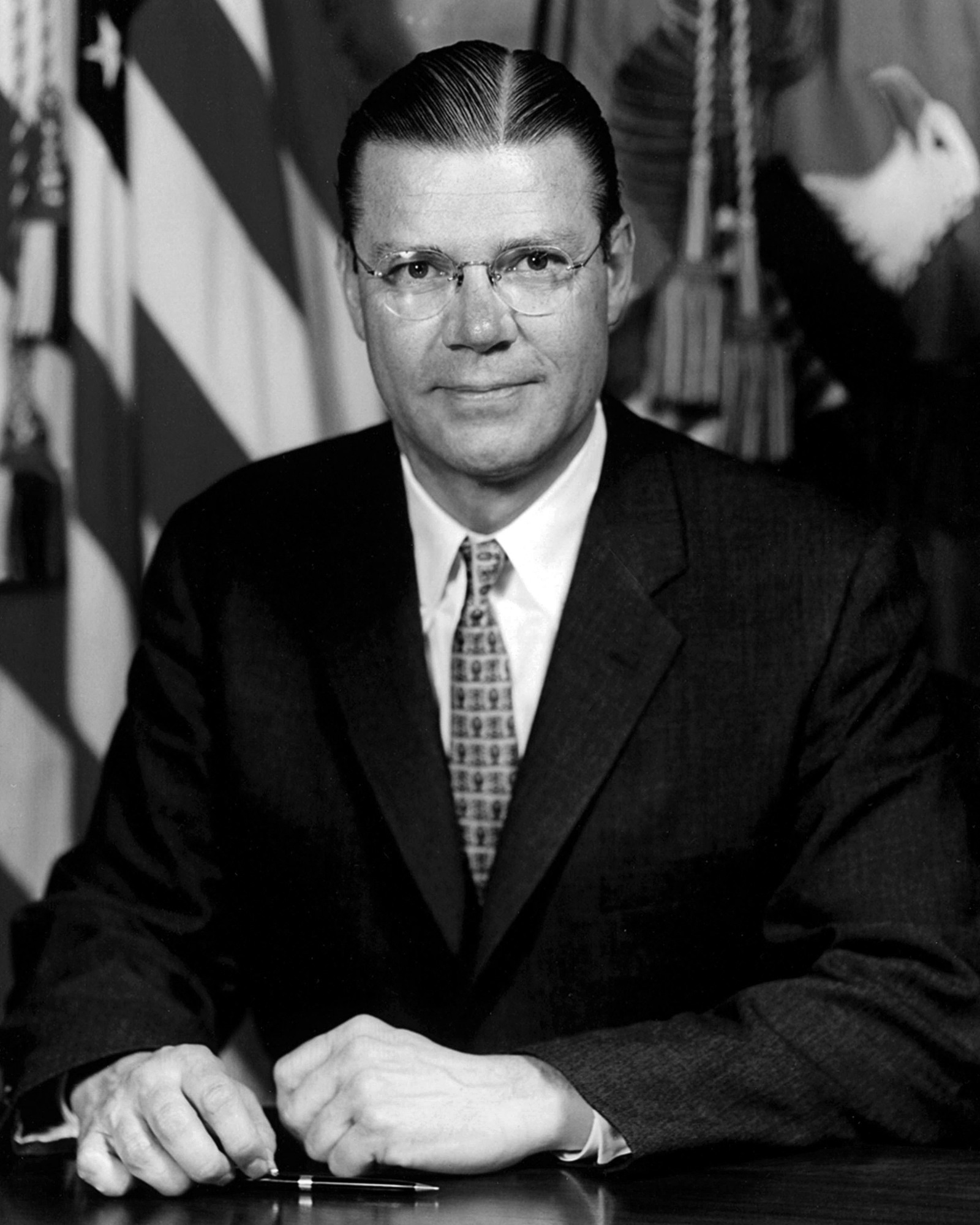
In 1889, Otto von Bismarck introduced a state pension for German workers. The pension age was seventy. Bismarck was seventy-four.1
Life expectancy at birth in Germany was roughly forty at the time. That number includes everyone who died before their fifth birthday, and in the late nineteenth century, a significant number did. A worker who survived childhood could expect to reach the late fifties or early sixties.2 Seventy was beyond most of them. Fewer than one in three boys who reached their fifth birthday lived to see it.
Bismarck set in 1889
a worker who survived childhood
The legislation was called the Invaliditäts- und Altersversicherung. The Reichstag passed it on May 24, 1889, and it took effect on January 1, 1891. It covered wage workers from the age of sixteen, and salaried staff below a set income.3 It looked like social progress. The motive was political.
The Social Democrats were gaining votes. Their platform promised exactly what Bismarck was now offering: pensions, health insurance, accident protection. If the state delivered these programs first, the socialists would lose their most powerful recruiting tool. Bismarck did not need to defeat the left in debate. He needed to remove the ground they were standing on.4 The pension's generosity was the mechanism. Promise to pay at seventy, and the worker feels invested in the state rather than in the party that wants to replace it. The cost was minimal. Most of the people it was supposed to serve would be dead before they collected.5
The age was lowered to sixty-five in 1916, during the First World War, eighteen years after Bismarck died. The revision was a wartime measure, made by politicians who never designed the system, in a country that was losing a generation of young men on the Western Front.6
Before 1889, the concept did not exist. A German factory worker in the 1880s did not think about when he would stop working. He thought about whether his body would hold. The miner, the steelworker, the dockhand. Each knew that the work would end when the body failed, and what followed was the family's problem. There was no plan because there was nothing to plan for. The gap between the end of labor and the end of life was measured in months, not decades. Almshouses, family, charity, the workhouse. There was no finish line. Bismarck invented one. He set it past the race.
You are organizing your life around a wartime revision of a counter-revolutionary tool.
The factory
For two decades after Bismarck's law, the state pension stayed a rarity. Britain introduced its own pension in 1908. David Lloyd George set the age at seventy, non-contributory, five shillings a week. He is credited with calling it a way to "lift the shadow of the workhouse from the homes of the poor."7 Other countries followed over the next half-century. The United States introduced Social Security in 1935, with a retirement age of sixty-five. Canada introduced the Old Age Pensions Act in 1927, means-tested, at seventy.8 These were safety nets. They were not yet organizing principles for an entire life. The distinction mattered. A safety net provides income when a person can no longer work. It says nothing about when that person should stop, what they should do afterward, or how the decades between stopping and dying should be structured. The safety net existed without the plan. The plan came later, when other forces converged to create a model for how an entire life should be organized around the safety net's existence.
The model hardened after the Second World War. Compulsory education expanded and extended childhood, pushing entry into the workforce further into a person's twenties. Union contracts standardized sixty-five as the career's end point, creating a fixed expiration date for labor. Social Security and its equivalents made the third phase financially viable for workers who could never have funded it from savings alone. Rising wages in the postwar industrial boom made accumulation possible for the first time on a mass scale. And lifespans lengthened enough to create a meaningful period between the end of work and the end of life, a gap that had barely existed when Bismarck set the age at seventy.9
Each development reinforced the others. Longer education required more years of earning to recover the investment. Longer careers required a fixed end point to create turnover. A fixed end point created a population of non-workers who needed income. And income in retirement required savings products, which required decades of contribution, which required a stable career, which required a defined starting point after education. Nobody designed the loop. The loop emerged from five independent developments converging in the same thirty-year window, and once it was running, each phase justified the existence of the others.
By the 1970s, the three-phase life was cultural expectation across the Western world. Learn, then earn, then rest. The sequence was the same for everyone, the transitions sharp, the ages fixed. The factory needed this model. Phase 1 trained workers for repetitive tasks that would not change for decades. Phase 2 extracted their labor for forty to forty-five years. Then Phase 3 cleared the line, replacing worn-out bodies with younger ones so the assembly could keep running.10 The plan felt inevitable because the infrastructure assumed it. School had a graduation date. Careers had a retirement age. Financial products had a target date that matched.
The factory is gone.
Not entirely. Manufacturing still employs millions. But as the organizing model for work in the economies that built the three-phase life, the factory has been replaced by something with opposite characteristics. Knowledge work does not wear the body down over forty years. It compounds. Pattern recognition improves with each cycle a person survives. Professional networks expand and become more valuable with every decade of use. The person who has spent thirty years inside a field is not a depreciated asset waiting to be replaced. They carry the accumulated knowledge that cannot be taught in a classroom or compressed into a training manual.11
The difference is visible in how expertise actually works. An emergency room nurse who has worked the same unit for fifteen years reads a patient's face before the monitors change. A mechanic who has listened to engines for thirty years diagnoses by sound what a younger technician needs a diagnostic computer to find. That knowledge lives nowhere except in the accumulated hours. It cannot be extracted, uploaded, or passed to a replacement on the day its carrier turns sixty-five.12
Americans born in the late baby boom held an average of nearly thirteen jobs between the ages of eighteen and fifty-eight.13 The idea of a single career spanning Phase 2, ending on a date determined before the career began, describes almost nobody. Continuous learning is now required for employment in most knowledge fields, which means Phase 1 never truly ends. Post-retirement life expectancy in the developed world was about twenty years in 2023, which means Phase 3 is no longer a brief coda. It is a second career's worth of time, organized around the assumption that the person filling it has stopped contributing.14
Every condition that built the three-phase model has reversed. The factory needed young bodies trained once for repetitive work. Knowledge work needs experienced minds applying accumulated judgment across years of context. Where the factory discarded workers after their physical capacity declined, the fields that now drive economic output reward the opposite. A person who has managed teams through three recessions carries a pattern library that a person who has read about recessions does not. A surgeon with twenty thousand procedures behind them sees risks that a surgeon with two thousand does not. The knowledge is not in the manual. It is in the accumulated hours, the failed attempts, the near-misses, the felt sense of when something is about to go wrong.12 The most valuable knowledge workers can reach their peak in their fifties and sixties, when the network is widest, the pattern recognition is sharpest, and the judgment has been tested across multiple economic and organizational cycles.15
The employer once absorbed the risk of funding retirement through defined-benefit pensions. The pension was a promise. Work here for thirty years, and when you stop, we will pay you a percentage of your salary until you die. The company bore the investment risk. The company bore the longevity risk. If the market dropped or the retiree lived longer than expected, the employer covered the difference. The pension required the worker to do one thing. Show up. The pension's administrators chose the investments, managed the fund, bore the actuarial risk, and wrote the check.
By 2023, defined-benefit pensions covered 11% of private-sector workers in the United States, down from 38% in 1980.16 The replacement, the 401(k), transferred every one of those risks to the individual. The investment risk. The longevity risk. The market-timing risk. The fee risk. The inflation risk. The 401(k) asks the worker to choose a contribution rate, select from a menu of funds, rebalance periodically, avoid the temptation to withdraw early, convert the accumulated balance into a stream of income at retirement, and hope the sequence of market returns cooperates across the entire period. The company's obligation shrank from a guaranteed income for life to a matching contribution of a few percent. The model did not change. The risk inside it moved.
with pensions, 1980
with pensions, 2023
In 2010, economists Susann Rohwedder and Robert Willis published a cross-national study comparing cognitive decline in the United States, England, and eleven European countries. They found that the countries with earlier retirement ages showed faster cognitive deterioration among retirees. The finding was specific. Not working was associated with a drop of about 4.7 points on a twenty-point test of immediate and delayed word recall, where the average score was just under ten. The authors argued the relationship was causal, using variation in national pension and retirement policies as instrumental variables.17 Retirement was better for the body. Less physical stress, more sleep, more exercise. It was worse for the mind. The daily stimulation that work provides, the social engagement, the problem-solving under real stakes, appeared to function as cognitive maintenance. Remove the maintenance and the decline accelerated.
The model tells the most experienced people to stop at the moment their accumulated judgment is worth the most. The documented cost of stopping is that the mind begins to deteriorate faster.
The three industries
The plan survived the disappearance of the conditions that created it because three industries depend on its assumptions.18
Education sells Phase 1 as a product with a completion date. The degree is the proof of completion. Graduation is the ceremony marking the boundary. The structure assumes that learning is something a person does once, in sequence, early in life, and then it is done. The industry measured by global university revenues alone exceeds two trillion dollars.19 The graduation ceremony works because it transforms an ambiguous state into a binary outcome. Graduate, or not. The institution needs that boundary. Without it, the four-year product has no packaging. A person who learns continuously across decades, adding skills as the work demands them, produces no graduation ceremony and generates no tuition revenue after the initial purchase.20
Employment organizes Phase 2 around a fixed end point and treats every departure from the sequence as an anomaly. The vocabulary reveals the assumption. "Career break" implies the career is a continuous line and the break is the interruption. "Late bloomer" implies there is a correct time to bloom. "Encore career" treats the real career as already finished. "Non-traditional student" measures the person against a sequence they did not follow.21 A forty-year-old who returns to university is a "mature student," processed through an orientation designed for eighteen-year-olds. A fifty-five-year-old who starts a company is a "late-stage entrepreneur." A thirty-year-old who takes two years off to care for a parent has a "gap" that every hiring algorithm flags. The model's vocabulary has no positive term for someone who organizes their life outside the sequence. Every departure has a word. Every word implies a return. Each term defines the person by their departure from the model, and the model funnels them back toward the sequence.22
The financial industry built the largest infrastructure on the assumption. The story begins with a paragraph in the tax code.
Section 401(k) of the Revenue Act of 1978 was intended to clarify rules around executive deferred compensation. It allowed employees to defer taxation on a portion of their salary. A benefits consultant in Pennsylvania named Ted Benna noticed the provision and saw a different use. He could structure it as a broad employer-sponsored savings plan, with the company matching a portion of the employee's contribution. He pitched the idea to a banking client. The client rejected it. Benna implemented the plan at his own firm, the Johnson Companies, in 1981. The IRS issued proposed regulations that November.23
The speed of adoption revealed the demand. By 1983, nearly half of large employers were offering or considering 401(k) plans. Employers saw the advantage immediately. They could offer a retirement benefit without the long-term liability of a pension. Match a few percent of the employee's salary, and the obligation ends when the paycheck stops. No promise to pay for thirty years after the employee retires. No actuarial risk. No unfunded liabilities on the balance sheet. By 2023, defined-contribution plans such as the 401(k) covered 49% of private-sector workers in the United States. Pensions had fallen from 38% to 11% over the same period. The transition was not gradual for the employee. It moved all investment risk from the employer, who had guaranteed a retirement income, to the individual, who now bore the full burden of choosing investments, managing fees, timing withdrawals, and hoping the market cooperated across three or four decades of accumulation and two or three decades of drawdown.24
In 2011, Benna said he had created "a monster" that should be "blown up."25 The original provision was a page and a half long. It was never designed to replace pensions. It was never intended to become the primary retirement savings vehicle for more than eighty million American workers. It became both.
Revenue Act of 1978
built on the provision, 2025
In 2006, Congress passed the Pension Protection Act, which created the qualified default investment alternative. The QDIA gave employers a legal safe harbor. Auto-enroll employees into a target-date fund and the employer is shielded from liability for the investment outcome. The provision was presented as encouragement for workers to save. Its primary function was to protect the employer. Auto-enrollment accelerated the flow of assets into target-date funds. By the end of 2025, those funds held $5.2 trillion, with three providers controlling roughly 60% of the total.26
The Canadian version of this story begins with doctors. In 1957, the Canadian Medical Association lobbied the federal government to create a tax-sheltered savings plan. Self-employed physicians were excluded from corporate pension plans and wanted the same tax advantage. The government obliged. Under Prime Minister Louis St. Laurent, the Registered Retirement Savings Plan was introduced as a supplement for people without employer pensions.27
Then employer pensions eroded. In the 1970s and 1980s, Canadian employers maintained defined-benefit pension plans alongside the RRSP. The RRSP supplemented. When companies began closing their pension plans in the 1990s and 2000s, citing cost, longevity risk, and accounting complexity, the RRSP was the only tax-advantaged vehicle left. It had not been designed for this role. It had no auto-enrollment mechanism. It had no employer matching requirement. It was a voluntary, individual savings account with a tax benefit that returned the greatest advantage to people in the highest brackets. The supplement became the plan. By 2022, 22% of Canadian tax filers contributed to an RRSP. Among those earning $200,000 to $500,000, the participation rate was 66%. The national retirement vehicle had three times the uptake among the highest earners as it did among the general population.28
income $200K to $500K
all Canadian tax filers
A tax shelter designed for doctors who had no pension became a national retirement vehicle that serves, disproportionately, the people who needed it least.29
Australia took a different approach. In 1992, Paul Keating's government made employer contributions to individual retirement accounts mandatory. The rate started at 3%. By 2025, it reached 12% of wages. Keating framed the contributions as deferred wages. The money was always the worker's. The employer was required to set it aside rather than pay it in cash. The system now holds over four trillion Australian dollars in assets, roughly 150% of Australia's GDP. A pension is a promise made by someone else. Keating's system was a compulsory savings account, built on the same three-phase assumption but honest about who bears the cost.30
Each of these industries is built on the same assumption. Life has three sequential phases with fixed transitions, and the person inside the model will move through it on schedule. Education profits from the completion of Phase 1. Employment profits from the structure of Phase 2. Financial services built $5.2 trillion in target-date funds on the assumption that Phase 3 will arrive at sixty-five. The conditions that created the model have reversed. The industries that profit from it have not.31
The identity
The plan does not only organize time. It installs an identity at each transition.
"I'm a student." The student borrows. Takes on debt. Defers income. The financial behavior follows from the identity, and the identity follows from the phase. "I'm a professional." The professional contributes. Pays down the debt. Builds the savings account. Makes the monthly 401(k) contribution. Buys the house. The behavior changes because the identity changed. "I'm retired." The retiree draws down. Shifts to a lower tax bracket. Begins what the financial industry calls decumulation. The products designed for this identity assume the person will spend less, travel more, and gradually deplete what they accumulated in the middle phase.32
Each identity answers the question the English-speaking world asks more frequently than any other after a name. "What do you do?" The student has an answer. The professional has an answer. After sixty-five, the answer becomes difficult. The question locates the person within the model. The three-phase plan gives every adult a position in the sequence, and the position determines how the person is processed by the institutions that serve each phase.33
Remove the position and the person becomes difficult to process. The transition from professional to retiree is the only identity shift in the three-phase model that has no receiving institution. When a student becomes a professional, an employer is waiting. When a professional becomes a retiree, no institution provides the replacement identity. The financial industry offers products for the retiree's money. It does not offer a structure for the retiree's days. The person who spent forty years answering the question with a job title, a company name, a function, now has to construct an answer from raw material that no institution has prepared.
People who retire involuntarily show significantly worse mental health outcomes than those who choose to stop. The word-recall drop Rohwedder and Willis measured runs in the same direction. Stop the work and the cognitive maintenance that came with it stops too. The research on the first two years of retirement shows elevated rates of depression, particularly among people whose identity was closely tied to their professional role. The model assumed Phase 3 was rest. For many, the removal of identity is the opposite of rest.34
The assumption that every person wants the same transition at the same age is not shared everywhere. In Japan in 2022, 25.2% of people over sixty-five were employed. In the bracket just after the pension threshold, ages sixty-five to sixty-nine, the rate was 50.8%. In South Korea, 37.3% of people over sixty-five worked. In the United States, the figure was 18.7%. In Germany, 8.9%. In France, 4.2%.35
South Korea
France
The numbers in Japan are particularly instructive. When asked why they work, more than half of Japanese over sixty give income as the reason. But among those over sixty-five, nearly three in ten also say work keeps the body healthy and slows aging. In a 2024 government survey, more than four in ten said they wanted to keep working to seventy-five or beyond, or for as long as they could.36 The three-phase model is a Western, post-industrial construct that was exported with the economic system that needed it. Where the construct did not take hold, people continued working. In the cultures that built the three-phase model, the identity of worker expires on a date the worker did not choose.37
The finish line
Bismarck's number was seventy, an age most of the workers it covered would never reach. The number was revised to sixty-five during a world war, by politicians who never designed the system, eighteen years after the man who created it was dead. The revision was never revisited. The number persisted. It organized an entire century of institutional design. Retirement ages around the world are now inching upward. Germany is phasing to sixty-seven by 2029. The United Kingdom is legislating increases to sixty-seven by 2028, sixty-eight by the mid-2040s. France raised its age from sixty-two to sixty-four in 2023, provoked the largest protests in a generation, and in late 2025 suspended the increase until 2028.38 The adjustments are actuarial. They address the cost of the plan. They do not question the plan itself. The question of whether life should have three phases, whether the phases should be sequential, whether the transitions should be sharp, whether the ages should be fixed, whether the same model should apply to a warehouse worker and a software architect, remains unasked.
The three-phase model built on that number was rational when the conditions that produced it were in place. The factory needed sequential phases. Rising wages made accumulation possible. Lifespans were long enough to create Phase 3 but not so long that Phase 3 became a second lifetime. Pensions transferred risk to the employer. Education could be completed once because the skills it taught would remain relevant for decades.39
Every one of those conditions has reversed. Knowledge compounds rather than depreciates. Careers span nearly thirteen jobs rather than one, and the skills they require now demand continuous updating rather than a single front-loaded education. The employer no longer bears the retirement risk. Phase 3 lasts about twenty years, longer than many of the careers that preceded it. The model did not adapt. Three industries profit from the model as it stands, and the cost of the model no longer fitting falls on the person living inside it.40
The plan had three phases. The first was a counter-revolutionary tool, designed by a seventy-four-year-old chancellor who set the pension age beyond the reach of most of the workers it was supposed to serve. The second was a wartime revision, lowered from seventy to sixty-five by politicians during a war that was killing the generation the pension was supposed to protect. The third was a tax accident, repurposed by a benefits consultant from a paragraph in the tax code that was intended for executive compensation, then described by its own creator as a monster.41
The person inside the plan calls it a life plan.
Notes
- Otto von Bismarck was born April 1, 1815, making him seventy-four when the Invaliditäts- und Altersversicherung was signed into law on June 22, 1889. The pension age of seventy was set by the legislation. U.S. Social Security Administration, "Otto von Bismarck," ssa.gov/history/ottob.html; German Federal Archives (Bundesarchiv). ↩
- Allgemeine Deutsche Sterbetafel 1881/90 (Statistik des Deutschen Reichs, Band 200; reprinted in Statistisches Jahrbuch für das Deutsche Reich 1937, p. 49). Life expectancy at birth was 37.2 years for males and 40.3 for females, heavily depressed by infant and child mortality. A male who reached 20 could expect 39.5 more years. Of 100,000 males born, 66,127 reached age 5, 60,970 reached 20 and 19,665 reached 70. ↩
- "Gesetz, betreffend die Invaliditäts- und Altersversicherung," Reichstag vote May 24, 1889, signed June 22, 1889, effective January 1, 1891. Section 1 covered, from age sixteen, workers, journeymen, apprentices and domestic servants employed for wages, and salaried staff earning no more than 2,000 marks a year. Reichsgesetzblatt 1889. ↩
- The Social Democratic Party of Germany (SPD) had been gaining votes throughout the 1880s despite Bismarck's Anti-Socialist Laws (Sozialistengesetz, 1878–1890). Bismarck's social insurance legislation, including accident insurance (1884), health insurance (1883), and old-age pensions (1889), was explicitly designed to undercut the SPD's appeal. See SSA, "Historical Background and Development of Social Security," ssa.gov/history/. ↩
- The political economy of Bismarck's pension system was recognized at the time: set the eligibility age beyond most workers' life expectancy, and the program functions as a loyalty device rather than a fiscal obligation. The promise of future payment changes political alignment without requiring present expenditure. This pattern, where a belief or institution outlives the conditions that made it rational because the beneficiaries of its continuation bear concentrated influence while the costs are dispersed, recurs across institutional design. See Thomas Sowell, Applied Economics: Thinking Beyond Stage One (2003), on policies that survive their original conditions because the political incentives for continuation outweigh the incentives for reform. ↩
- The pension age was lowered from seventy to sixty-five by the Reichsversicherungsordnung amendment of 1916. Bismarck died July 30, 1898. The 1916 revision occurred during the First World War; Germany was sustaining massive casualties on the Western and Eastern Fronts. The lower age was retained after the war and became the standard across Western pension systems. ↩
- Old Age Pensions Act 1908, United Kingdom. David Lloyd George, then Chancellor of the Exchequer, introduced the non-contributory pension at age seventy, paying five shillings per week. 596,038 pensions were granted by December 31, 1908. UK Parliament, legislation.gov.uk. ↩
- Social Security Act, signed by Franklin D. Roosevelt on August 14, 1935, established retirement benefits at age sixty-five. Canadian Old Age Pensions Act, 1927, set at age seventy with a means test. The 1952 Old Age Security Act made the Canadian pension universal at seventy; the age fell in steps to sixty-five between 1966 and 1970. Parliament of Canada, Library of Parliament research publications. ↩
- The convergence of these five factors, compulsory education, union contracts, public pension systems, rising postwar wages, and increased longevity, occurred roughly between 1945 and 1975. Each factor reinforced the others, creating a self-sustaining model. See OECD, "Pensions at a Glance" historical series. ↩
- The factory's labor model mapped cleanly onto a three-phase life. Phase 1 (education) trained for tasks that remained consistent for decades. Phase 2 (labor) extracted value across a predictable career. Phase 3 (retirement) cleared positions for incoming workers, functioning as an organized exit. The model served the assembly line's needs for standardized, replaceable labor inputs. ↩
- The distinction between depreciating physical labor and compounding knowledge work is well-documented in management literature. Peter Drucker identified the knowledge worker as the central economic actor of the late twentieth century in The Effective Executive (1966). The insight that practical knowledge, judgment, and pattern recognition, the kind of intelligence acquired only through experience in context, cannot be fully codified or transmitted through formal education has been observed across multiple disciplines. See James C. Scott, Seeing Like a State (1998), on metis: the local, practical knowledge that resists formalization and can only be acquired through extended practice. ↩
- Gary Klein's research on naturalistic decision-making documents how experienced practitioners in high-stakes environments (emergency medicine, firefighting, military command) develop a "recognition-primed decision" process. The expert does not analyze options from a menu. They recognize the current situation as similar to something they have seen before and act accordingly. This capacity cannot be accelerated by classroom education or replicated by protocol. It requires the accumulated hours under real conditions. See Klein, Sources of Power: How People Make Decisions (1998). James C. Scott names this kind of knowledge metis: practical intelligence that can only be acquired through extended practice and resists codification. See Scott, Seeing Like a State (1998), Chapter 9. ↩ ↩
- Bureau of Labor Statistics, "Number of Jobs, Labor Market Experience, Marital Status, and Health," NLSY79 longitudinal data. Individuals born in 1957 to 1964 held an average of 12.9 jobs from ages 18 to 58 (release of August 26, 2025). ↩
- Life expectancy at sixty-five in the United States was 18.2 years for men and 20.7 years for women in 2023 (NCHS, United States Life Tables, 2023, National Vital Statistics Reports 74, no. 6, July 2025). Across OECD countries, a sixty-five-year-old in 2023 could expect to live about 20 more years (OECD, Health at a Glance 2025). ↩
- Different abilities peak at different ages. In data from 48,537 participants and standard test norms, some abilities "do not peak until the 40s or later," and vocabulary peaked around 50 in standard test norms and around 65 in the web data. Hartshorne JK, Germine LT, "When Does Cognitive Functioning Peak?" Psychological Science 26, no. 4 (2015): 433–443. ↩
- Bureau of Labor Statistics, Employee Benefits Survey. Defined-benefit pension coverage in private industry: 38% (1980), 20% (2008), 15% (2019), 11% (2023). The 401(k) and similar defined-contribution plans covered 49% of private-sector workers by 2023. 1980 and 2008 figures: Butrica BA, Iams HM, Smith KE, Toder EJ, "The Disappearing Defined Benefit Pension and Its Potential Impact on the Retirement Incomes of Baby Boomers," Social Security Bulletin 69, no. 3 (2009). ↩
- Rohwedder, Susann and Robert J. Willis. "Mental Retirement." Journal of Economic Perspectives 24, no. 1 (2010): 119–138. The study used data from the Health and Retirement Study (US), English Longitudinal Study of Ageing (England), and the Survey of Health, Ageing and Retirement in Europe (11 countries, 2004). Countries with earlier retirement ages showed worse cognitive performance among retirees. The estimated effect is a drop of about 4.7 points on a 0 to 20 scale of immediate and delayed word recall, against a sample average just under 10, or just under 1.5 standard deviations. The authors' causal argument uses variation in pension, tax, and disability policies across countries as instrumental variables. See also Mazzonna and Peracchi, "Ageing, cognitive abilities and retirement," European Economic Review (2012). ↩
- The pattern of a policy surviving the reversal of the conditions that created it, sustained by industries whose revenue depends on the policy's continuation, is a case of what economists call concentrated benefits and dispersed costs. Three industries benefit directly from the three-phase model. The cost of the model no longer fitting falls diffusely across every person whose life does not match the sequence. See Thomas Sowell, Knowledge and Decisions (1980) and The Vision of the Anointed (1995) on why policies persist when the constituency benefiting from continuation is organized and the population bearing the cost is not. ↩
- Global higher education revenue was estimated at approximately $2.3 trillion in 2023. UNESCO Institute for Statistics; HolonIQ, "Global Higher Education Market Size" (2024). ↩
- The assumption that learning is a phase rather than a continuous activity serves the institution that sells the phase. If knowledge work requires continuous updating, the four-year bundled degree becomes a first installment rather than a completed purchase. The institutional revenue model depends on the boundary being real. The boundary between "student" and "professional" makes the human life legible to the educational institution: a person who can be enrolled, processed, graduated, and counted. James C. Scott's Seeing Like a State (1998) traces this pattern at the civilizational level: institutions simplify complex realities into standardized categories that serve administrative needs. The three-phase model is a legibility project applied to a human life. ↩
- "Sabbatical" derives from the Hebrew "shabbat." Harvard introduced the first formal academic sabbatical in 1880. "Gap year" has roots in the 17th-century Grand Tour; the modern term emerged in 1970s Britain through Frank Fisher, headmaster of Wellington College, who founded GAP Activity Projects. "Encore career" was coined by Marc Freedman (Civic Ventures, now Encore.org) and popularized in his 2007 book Encore: Finding Work That Matters in the Second Half of Life. ↩
- Each term in the career vocabulary defines the person by their position relative to the expected sequence. The terms do not describe the person. They describe the departure. "Non-traditional student" does not say what the student is. It says what they are not: not the person who followed the standard order. The language renders deviation legible by measuring it against the model. A life organized around accumulated judgment, moving between learning and contributing across decades without a fixed boundary, has no term in the employment vocabulary. It is illegible to the system. See Scott, Seeing Like a State, on how systems designed for standardized categories cannot process what falls outside them. ↩
- Section 401(k) of the Revenue Act of 1978, 26 U.S.C. 401(k). Ted Benna was a benefits consultant at the Johnson Companies in Pennsylvania. He first proposed the 401(k) plan to a banking client, which rejected it. He then implemented it at his own firm. The IRS issued proposed regulations in November 1981. See "Meet the Man Who Invented Modern Retirement," HISTORY.com; "Father of modern 401(k) says it fails many Americans," Marketplace (2013). ↩
- Bureau of Labor Statistics, National Compensation Survey, March 2023: 49% of private industry workers participated in defined-contribution plans, chiefly the 401(k); 67% had access. In 1980, 8% of private wage and salary workers participated only in a defined-contribution plan (Butrica et al., Social Security Bulletin 69, no. 3, 2009). Defined-benefit plan coverage fell from 38% to 11% over the same period. The shift transferred investment risk, longevity risk, and market-timing risk entirely from the employer to the individual employee. ↩
- "I knew it was going to be big, but I was certainly not anticipating that it would be the primary way people would be accumulating money for retirement 30 plus years later." Ted Benna, interview, Workforce, as quoted by CNBC, January 4, 2017. Benna "lamented in 2011" that he had created "a monster" that should be "blown up." Jeremy Olshan, "The inventor of the 401(k) says he created a 'monster,'" MarketWatch, May 16, 2016. Separately, he told The Wall Street Journal: "I helped open the door for Wall Street to make even more money than they were already making. That is one thing I do regret." ("The Champions of the 401(k) Lament the Revolution They Started," January 2017.) In 2022, 401(k) plans covered more than 80 million participants (Investment Company Institute and BrightScope, The BrightScope/ICI Defined Contribution Plan Profile: A Close Look at 401(k) Plans, 2022, 2025). ↩
- Pension Protection Act of 2006, P.L. 109-280. The QDIA (qualified default investment alternative) provision, Section 404(c)(5), allows employers to auto-enroll employees into target-date funds and receive safe-harbor protection from fiduciary liability for the investment outcome. The provision accelerated the flow of assets into target-date funds by making auto-enrollment the path of least resistance for both employer and employee. Target-date fund assets: Sway Research, "The State of the Target-Date Market: Year-End 2025," reported by PLANSPONSOR, February 24, 2026. Mutual fund and CIT series held $4.8 trillion and custom strategies $371 billion, a total of $5.2 trillion at year-end 2025, with Vanguard holding approximately $1.79 trillion, followed by Fidelity ($693 billion) and BlackRock ($611 billion). Morningstar's 2026 Target-Date Fund Landscape, which excludes custom strategies, gives $4.8 trillion, with Vanguard at 37%. Frédéric Bastiat's distinction between "that which is seen" and "that which is not seen" (1850) applies precisely: seen, the auto-enrolled employee saving for retirement; unseen, the liability shield protecting the employer and the fee stream flowing to the fund manager. See Bastiat, Ce qu'on voit et ce qu'on ne voit pas (1850). ↩
- The Registered Retirement Savings Plan was introduced in 1957 under the government of Prime Minister Louis St. Laurent. The Canadian Medical Association lobbied for the creation of a tax-sheltered retirement savings vehicle for self-employed professionals, particularly physicians, who were excluded from employer-sponsored pension plans. The RRSP was designed as a supplement to the pension system, not a replacement. See Parliament of Canada, Tax Expenditures and Evaluations; "A bit of 1957 RRSP history," HighInterestSavings.ca; CMA, "Tax advocacy," cma.ca. ↩
- Statistics Canada, The Daily, April 2, 2024, Table 3, RRSP contributions by income group, 2022 tax year. Overall participation rate: 21.7% of tax filers. Income $200,000 to $499,999: 66.2%. Income under $20,000: 1.7%, fewer than one in fifty. In 2023 the overall rate was 21% (Office of the Chief Actuary, OSFI). The participation gap reflects the RRSP's structural bias toward high-income tax brackets, where the deduction generates the largest benefit. ↩
- The RRSP's evolution from a tax shelter for doctors into a national retirement system that disproportionately serves high-income earners illustrates a recurring pattern in institutional design: a policy created for a narrow constituency becomes a general instrument, but the original beneficiaries retain a structural advantage. The visible layer of the RRSP is a retirement savings tool available to all Canadians. The structural layer is a tax shelter that returns the greatest benefit to those in the highest tax brackets, designed by and for professionals who were already well-compensated. See Frédéric Bastiat, That Which Is Seen and That Which Is Not Seen (1850). ↩
- Superannuation Guarantee (Administration) Act 1992, Australia. Paul Keating, then Treasurer and later Prime Minister, was the principal architect. The original contribution rate was 3% of wages. The rate has been legislated upward in stages, reaching 12% as of July 2025. Total superannuation assets: AUD $4.47 trillion (September 30, 2025), fourth-largest retirement pool globally. Parliament of Australia; Australian Prudential Regulation Authority (APRA), Superannuation Statistics. ↩
- The three industries that depend on the three-phase model, education, employment, and financial services, represent concentrated interests. Each industry has organized constituencies, lobbying capacity, and revenue streams tied to the model's continuation. The individuals whose lives no longer fit the model represent a dispersed cost: they bear the consequence of the misfit individually, without collective representation. This asymmetry, organized beneficiaries versus dispersed cost-bearers, is the structural reason policies persist after the conditions that created them have reversed. See Thomas Sowell, Applied Economics (2003) and A Conflict of Visions (1987). ↩
- The three identities, student, professional, retiree, each carry a corresponding set of financial behaviors and product relationships. The financial services industry designs products for each identity: student loans for Phase 1, savings and investment products for Phase 2, drawdown and annuity products for Phase 3. Clayton Christensen's "Jobs to Be Done" framework suggests that none of these identities describe what the person actually needs. Nobody hires "retirement." Some hire rest from work they did not choose. Some hire freedom to start something new. Some hire time with family. Some hire escape from an institution. The bundled product called "retirement" assumes everyone needs the same thing at the same age. Unbundle the job and Phase 3 dissolves into different people needing different things at different times. See Christensen, Competing Against Luck (2016). ↩
- The legibility function of "What do you do?" operates in both directions. The person answering is placed within the model. The person asking is processing them through it. The answer locates the individual in Phase 1, 2, or 3, and institutions respond accordingly: lenders, insurers, marketers, employers, and social contacts all calibrate their approach based on the phase. A person without a clear phase location is difficult to process. James C. Scott would recognize this as an illegibility problem: the institutions designed to serve the three-phase life cannot process a life that does not fit the model. See Scott, Seeing Like a State (1998), Chapters 1–2. ↩
- On involuntary retirement and mental health: Dave, Dhaval, Inas Rashad, and Jasmina Spasojevic. "The Effects of Retirement on Physical and Mental Health Outcomes." Southern Economic Journal 75, no. 2 (2008): 497–523. The word-recall figure is from Rohwedder and Willis (2010), note 17 above. On the distinction between voluntary and involuntary retirement outcomes, see also van Solinge, Hanna and Kene Henkens. "Adjustment to and Satisfaction with Retirement." Psychology and Aging 23, no. 2 (2008): 422–434. ↩
- Japan Ministry of Internal Affairs and Communications, Labour Force Survey, 2022; other countries, OECD.Stat, 2022, as compiled by the Statistics Bureau of Japan. In 2023 Japan's rate was again 25.2%, and 52.0% at ages 65 to 69. Over-65 employment rates: Japan 25.2%, South Korea 37.3%, United States 18.7%, Canada 14.4%, Germany 8.9%, France 4.2%. Japan age 65–69: 50.8%. The variation is not fully explained by pension adequacy; cultural norms, labor market structure, and legal frameworks all contribute. ↩
- Cabinet Office, Government of Japan, Annual Report on the Ageing Society 2025, Chapter 1, Section 2, Figures 6 and 7, from a survey of people aged 60 and over conducted October 1 to November 8, 2024. "For income" was the most common reason for working, at over half; among those 65 and over, nearly 30% said work "is good for the body and prevents aging." Answers of "until about 75," "until about 80" or "as long as I can work" together came to over 40%. The 2021 report's international survey (2020) found 51% of Japanese over 60 gave economic reasons. ↩
- The variation in post-65 employment rates across developed economies suggests that the three-phase model is culturally specific rather than biologically determined. Clayton Christensen's framework would note that the "job" people hire the post-career phase to do varies by cultural context. In cultures where the identity of worker carries no fixed expiration, the demand for a distinct Phase 3 is weaker. See Christensen, Competing Against Luck (2016). ↩
- The number sixty-five was Bismarck's wartime successor's number, not Bismarck's. Bismarck chose seventy. The number that organized the twentieth century was a wartime reduction made under conditions of mass military casualties, eighteen years after the program's architect was dead. France suspended the 2023 increase in its social security financing law for 2026 (LFSS 2026, promulgated December 30, 2025), for pensions starting from September 1, 2026, with the rise due to resume on January 1, 2028. ↩
- Each of the five conditions that created the three-phase model (factory-model labor, rising wages, expanding lifespans, employer-borne pension risk, and once-completed education) has reversed or fundamentally changed since the 1970s. The model persists not because the conditions still hold but because the institutional infrastructure built on the model's assumptions has its own inertia. ↩
- The cost of the model no longer fitting falls on the individual who lives inside it. The education industry does not bear the cost of Phase 1 no longer being sufficient for a career. The employer does not bear the cost of Phase 2 ending at an arbitrary age. The financial industry does not bear the cost of Phase 3 lasting longer than the savings were designed to fund. In each case, the cost transfers from the institution that profits from the phase to the person living through it. See Thomas Sowell, The Quest for Cosmic Justice (1999) and Knowledge and Decisions (1980), on cost transfer as the permanent feature of institutional design. ↩
- Bismarck's pension (1889, age seventy): a counter-revolutionary tool. The 1916 revision (age sixty-five): a wartime measure. Section 401(k) (1978/1981): an accidental repurposing of executive compensation rules. Ted Benna's own assessment, in 2011: he had created "a monster." Paul Keating's Australian Superannuation (1992) was more deliberate, framed explicitly as "deferred wages," but even Keating's system was built on the same three-phase assumption. The RRSP (1957) was a doctors' lobby. The UK auto-enrolment (2008) was a Turner Commission recommendation that doubled private pension participation from 42% to 86%, but the underlying model remained unchanged. ↩