In August 2000, General Electric was the most valuable company on Earth. Market capitalization: approximately $600 billion. More than a century of industrial history. Jet engines, power plants, medical equipment, media, and a financial services arm larger than most banks. GE had been in the Dow Jones Industrial Average since 1907. A year later, Jeff Immelt became chief executive.1
For the next sixteen years, the earnings reports kept arriving. Revenue figures, profit margins, quarterly beats. The dividend, cut once in 2009, was rebuilt. The buybacks continued. Wall Street covered the stock. The narrative was intact.
By the time Immelt's exit was announced in June 2017, GE's stock had fallen about 30 percent. The Dow had gained about 120 percent over the same period.2 In 2018, GE was removed from the Dow Jones Industrial Average after 110 consecutive years.3 By 2019, the market cap had fallen to approximately $75 billion. In 2024, the company that had once been worth $600 billion was split into three separate pieces. At the split, their combined value was roughly $226 billion. Less than half of the peak.4
The company reported a profit in fifteen of Immelt's sixteen years. From its 2000 peak to 2019, the value fell 87 percent.
That is not supposed to happen. A profitable company is supposed to be gaining value, not losing it. The earnings report is the document that tells you whether a business is healthy. Fifteen profitable years out of sixteen should mean compounding wealth. It did not.
The belief is simple. When a company reports profit, it is making money. The break is also simple. Profit is a story the accountant tells. Cash is what is left in the register.
The two numbers
Every public company produces two numbers that describe how much money it made. The first is net income. This is the number the earnings report leads with. It follows Generally Accepted Accounting Principles, known as GAAP. It includes revenue, subtracts expenses, accounts for depreciation, applies tax provisions, and arrives at a bottom line. This is what the financial press reports as "profit."
The second number is free cash flow. This is simpler. Cash that came in minus cash that went out, after subtracting whatever the company spent on maintaining and expanding its assets. Free cash flow measures what actually happened, not what the accounting rules say happened. What the register shows at the end of the quarter.
These two numbers are supposed to approximate each other over time. They do not have to. And when they diverge, the divergence can last years.
Warren Buffett named this problem in 1986. He called his alternative "owner earnings": net income plus depreciation and amortization, minus the capital spending required to maintain the competitive position of the business. That remainder is what actually belongs to the owner. Everything above it is accounting.5
+ Depreciation and amortization
− Maintenance capital expenditures
= What actually belongs to the owner
Bezos would later reach the same conclusion from a different direction. A company can report profits for years while losing money the entire time. The earnings report and the cash register can tell opposite stories about the same business and both be accurate.
The difference matters because GAAP earnings can be shaped. Revenue can be recognized early. Expenses can be capitalized instead of expensed. Restructuring charges can be classified as "one-time" for years running. Depreciation schedules can be stretched. Pension obligations can be adjusted using rate assumptions. Stock-based compensation can be excluded from the headline number. Every one of these choices is legal. Every one of them widens the gap between the number the company reports and the cash the company has.
A company can report record earnings in the same quarter it burns through its last reserves. You would not know this from the earnings report alone.
The first number arrives quarterly. It confirms the narrative. The second number shows up later, in debt schedules and deferred maintenance and pension shortfalls that surface years after the people who created them have left. The gap between the two can run for years before it closes. When it closes, it closes all at once.
The inheritance
Jeff Immelt did not destroy GE. He inherited a structure that was already complex. Jack Welch had built a conglomerate spanning jet engines, power plants, medical equipment, light bulbs, appliances, media, and a massive financial services arm called GE Capital. The complexity was there. Welch's discipline, to be number one or number two in every market or get out, kept it from compounding.6
Immelt loosened the discipline. Between 2001 and 2007, he expanded GE Capital aggressively. By 2007, GE Capital accounted for 55 percent of the company's profits. An industrial conglomerate was now, by the numbers, a financial institution. The concentration risk was enormous. Nobody on the earnings call said so.7
When the financial crisis arrived in 2008, GE Capital nearly collapsed. The federal government provided $139 billion in debt guarantees. Buffett provided $3 billion in rescue capital, but not at market terms. He demanded a 10 percent preferred stock, a rate that priced in the desperation the earnings reports had not shown.8
This was the moment of truth. GE Capital had revealed itself as an existential risk. Immelt had two options. He could recognize GE Capital as the thing that had nearly killed the company and begin dismantling it. Or he could take the government guarantees, stabilize the narrative, and continue.
He continued.
In 2015, GE completed its acquisition of Alstom's power business for $10.6 billion. It was the largest industrial acquisition in GE's history. The thesis was dominance in power generation. The reality was that Alstom made coal and gas turbines, and renewable energy was accelerating. Global turbine demand collapsed. By 2018, GE's power division was writing off most of what it had bought. The eventual write-down was approximately $23 billion. More than twice what they paid.9
And throughout all of it, the buybacks continued.
The buybacks
Between 2015 and 2017, GE generated approximately $30 billion from free cash flow and asset sales. During the same period, GE spent approximately $75 billion on stock buybacks, dividends, and acquisitions. The gap was roughly $45 billion. That money came from somewhere. It came from borrowing. It came from depleting reserves. It came from the future.10
That pattern held across the full Immelt tenure. Tens of billions in buybacks while the stock fell about 30 percent. Those repurchases did not return value to shareholders. They destroyed it. The company was buying its own stock at inflated prices with borrowed money.11
Scott Davis, a longtime GE analyst, estimated that Immelt's total return on acquisitions was less than half of what the company would have earned by putting the same money in a stock index fund.12
GE had paid a dividend since the 1800s. Immelt cut it once, in February 2009, from 31 cents a quarter to 10, with the company in crisis. Then he raised it again, even as the cash to support it disappeared. Within months of his departure, it was cut in half. The pension, examined after he left, was underfunded by $31 billion.13
For fifteen of sixteen years, the earnings reports said the company was profitable. For sixteen years, the cash was leaving faster than it arrived.
He had a big steel ball on a crane and he destroyed it as if he was tearing down an old building. Ken Langone, investor, Fox Business, October 2018
In 2024, General Electric was split into three companies: GE Aerospace, GE HealthCare, and GE Vernova. The split was an admission that the conglomerate was worth more dead than alive. At the split, the three pieces were valued at roughly $226 billion. Still less than half of the $600 billion peak. Two years later, freed from each other, they were worth more than the peak in nominal dollars. The Dow Jones membership, held for 110 years, was gone.4
The adjustment
GE is not the only company that reported profit while the cash told a different story. It is the largest and the longest. But the mechanism works at every scale.
When WeWork sold bonds in April 2018, it presented investors with a metric called "community-adjusted EBITDA." Standard EBITDA already excludes interest, taxes, depreciation, and amortization. WeWork's version went further. It also excluded sales and marketing, the cost of opening new buildings and entering new markets, and general and administrative costs. This is a growth company excluding the cost of its growth and the cost of running the company.14
Under this metric, WeWork appeared profitable. Community-adjusted EBITDA for 2018 was positive $467 million. Under GAAP, WeWork lost $1.9 billion that same year. The metric turned a $1.9 billion loss into a $467 million profit by excluding the cost of growing the business and running it.15
By the time WeWork filed for bankruptcy in November 2023, the company that had been valued at $47 billion had a market capitalization of roughly $45 million. Masayoshi Son, whose SoftBank had invested $18.5 billion, said: "It was foolish of me to invest in WeWork. I was wrong."16
When Uber reported "adjusted EBITDA profitability" in 2022, the announcement was covered as a milestone. Uber had finally turned profitable. Among the costs the adjusted number excluded was stock-based compensation. For the full year, Uber's stock-based compensation was $1.8 billion. Its GAAP net loss was $9.1 billion. Stock-based compensation is a real cost. It dilutes shareholders. It shows up in the cash flow statement. It is compensation the company chose to issue instead of cash. Uber excluded it from the number they wanted investors to see, then declared themselves profitable. GAAP profit came the next year, in 2023, helped by $1.6 billion in gains on its investments.17
The mechanism is always the same. Define a new version of profit. Exclude the costs you prefer not to count. Report the number you invented. The financial press prints it. The market prices on it. And the gap between the reported number and the cash in the register gets a little wider. In 1996, 59 percent of S&P; 500 companies used at least one non-GAAP metric. By 2017, 97 percent did.18
The brands
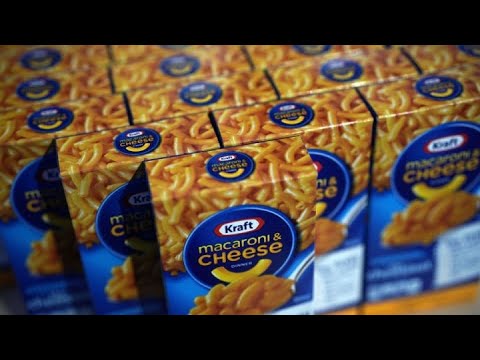
Kraft Heinz represents a different version of the same problem. Not invented metrics. Not borrowed buybacks. Something quieter. Profit extracted from the future.
In 2015, 3G Capital, the Brazilian private equity firm, engineered the merger of Kraft and Heinz. Their method was zero-based budgeting. Every line item started at zero each year and had to be justified from scratch. The result was aggressive cost-cutting across the merged company. Advertising dropped 39 percent below pre-merger levels. Marketing. Brand investment. Product innovation. The things that are expensive today and pay off in three to five years.19
Research and development, the line item that determines whether a product improves or stagnates, was about a quarter of what competitors spent. Kraft Heinz was cutting the mechanism by which the brands would remain worth buying.
Earnings rose. Wall Street applauded. The cost-cutting was working. Margins expanded. Analysts upgraded the stock. The numbers looked excellent.
Then consumers noticed. Store brands improved. Competitors kept investing. The Kraft Heinz brands that had survived on legacy recognition began to lose shelf space. Consumers who had always reached for Kraft Singles started reaching for the store brand that cost a dollar less and tasted the same. The cost-cutting had not made the company more efficient. It had starved the thing that made the products worth buying.
In February 2019, Kraft Heinz recorded a $15.4 billion write-down. Fifteen billion dollars of brand value, erased. It was the largest write-down in Kraft history. The SEC launched an investigation into the company's accounting practices. The stock, which had traded at $97.77 in February 2017, dropped 27 percent in a single day. Within months it fell below $30.20
Warren Buffett, whose Berkshire Hathaway held a 26.7 percent stake, had praised the deal publicly. After the write-down, he was direct:
Warren Buffett: Berkshire Hathaway 'overpaid' for Kraft
CNBC Television
I was wrong in a couple of ways about Kraft Heinz. We overpaid for Kraft. Warren Buffett, CNBC interview, February 2019
The earnings were real. The profit showed up in the income statement. The cost-cutting produced genuine short-term savings. None of this was fraudulent. It was, by every accounting standard, legitimate. The problem is that a brand is an asset that does not appear on the balance sheet at its true value. You can stop feeding it for years and the balance sheet will not change. The income statement will improve. Then one quarter, someone does the math, and $15.4 billion disappears overnight.
Sowell had a name for this. Stage One Thinking. The cost cuts were Stage One: margins rose, earnings beat, the stock climbed. Stage Two was the brand erosion, the shelf-space losses, the $15.4 billion that vanished when someone finally checked what was underneath the number. The more satisfying the Stage One result, the longer everyone waits to look at Stage Two.21
The company was profitable. The profit came from the future, and the future eventually arrived.
The structural finding
In his 2004 letter, Bezos illustrated the gap with a hypothetical machine that carries people from place to place. Over four years the business earned $150 million in cumulative profit and burned $530 million in free cash flow.22
Cumulative free cash flow: −$530 million
The business reported profits. The owner lost $530 million.
| Company | Stage One (reported) | Stage Two (actual) | Consequence |
|---|---|---|---|
| GE (2001-2017) | 15 of 16 years of reported profit | $30B generated, $75B spent | $600B → $75B. Removed from Dow. |
| WeWork (2018) | "Community-adjusted EBITDA" +$467M | $1.9B GAAP net loss | $47B → $45M. Bankruptcy. |
| Kraft Heinz (2015-2019) | Rising earnings from cost cuts | R&D at 0.36% of sales vs 1.4% peers | $15.4B write-down. Stock −71%. |
Buffett built a formula to force the question. Bezos built a metric. Both instruments did the same thing: measured the gap between the number the company reports and the cash the company has. GE did not have that instrument. For sixteen years, the earnings report was the truth. The cash flow statement was a footnote. The consequence chain ran in the background until $500 billion was gone.
The earnings report does what it was designed to do. It was never designed to tell you what is in the register. People decided, on their own, that it did.
Paradoxically, from a cash flow perspective, the slower this business grows the better off it is. Jeff Bezos, Amazon shareholder letter, 2004
The company was profitable. The cash register was empty. The two statements do not contradict each other. They never have.
Sources
- GE peak market capitalization approximately $600 billion in August 2000, making it the most valuable company on Earth. Corporate history from GE's founding in 1892 (Edison General Electric merger with Thomson-Houston). Dow Jones Industrial Average membership since 1907 (with earlier inclusion 1896-1898). Immelt appointed September 7, 2001, four days before 9/11. Bloomberg historical data; Fortune, "What the Hell Happened at GE?" GE's market value had already fallen by about a third from its August 2000 peak by the time Immelt took over in September 2001. ↩
- Immelt tenure stock return: about -30% (September 2001 to June 2017). Dow Jones Industrial Average: about +120% over the same period. WBUR, "After 16 Years, Immelt's Tenure Comes To Close At GE," June 12, 2017; CNBC. GE reported a 2015 net loss attributable to common shareowners of $6.1 billion, driven by charges to exit GE Capital (GE 10-K). ↩
- GE removed from Dow Jones Industrial Average on June 26, 2018. Replaced by Walgreens Boots Alliance. GE was the last surviving member of the original 1896 Dow. It had been in the index continuously since November 7, 1907. NPR, June 2018; CNBC, June 2018. ↩
- GE three-way split completed April 2, 2024: GE Aerospace (~$148B), GE HealthCare (~$40B), GE Vernova (~$38B). Combined approximately $226B. Axios, "GE aviation and energy businesses start trading," April 3, 2024. Yale School of Management, "GE's Split Unravels a Massive Management Mistake." By mid-2026, GE Aerospace was valued at roughly $370 billion, GE Vernova at roughly $260 billion and GE HealthCare at roughly $35 billion. The $600 billion of August 2000 is about $1.1 trillion in 2026 dollars. ↩ ↩
- Buffett's owner earnings concept, formalized in the 1986 Berkshire Hathaway shareholder letter: "owner earnings represent (a) reported earnings plus (b) depreciation, depletion, amortization, and certain other non-cash charges less (c) the average annual amount of capitalized expenditures for plant and equipment, etc. that the business requires to fully maintain its long-term competitive position and its unit volume." Berkshire Hathaway Inc. Annual Report, 1986. ↩
- Jack Welch's "be #1 or #2 in every market or get out" strategy. Fortune, multiple profiles. HBS case studies on GE under Welch. ↩
- GE Capital reached 55% of consolidated GE profits by 2007. Bloomberg, "What Happened to General Electric?" (2019 interactive). GE 2007 10-K filing. ↩
- Federal government debt guarantees for GE Capital: $139 billion through the Temporary Liquidity Guarantee Program (TLGP) and Commercial Paper Funding Facility. Buffett invested $3 billion in GE preferred stock at 10% yield, October 2008. Bloomberg, CNBC coverage. ↩
- Alstom power business acquisition completed November 2, 2015, for approximately $10.6 billion (EUR 9.7 billion). GE power division write-down of approximately $23 billion. On October 1, 2018, GE said it would take a non-cash goodwill charge of about $23 billion on its power business, which related primarily to the Alstom acquisition (CNBC, October 1, 2018). Fortune, Bloomberg, GE 10-K filings. ↩
- GE capital allocation 2015-2017: approximately $30 billion generated from free cash flow and asset sales (including GE Capital dispositions); approximately $75 billion spent on buybacks, dividends, and acquisitions. The $45 billion gap was funded by increased debt and reserve depletion. CNN Money, March 2018; GE 10-K filings for fiscal years 2015, 2016, 2017. ↩
- GE buybacks under Immelt: over the decade ending 2017, GE spent $53.9 billion repurchasing 2.07 billion shares at an average price of $26/share. In 2016 and 2017 alone, $24 billion in buybacks at average prices of $30.30 and $19.65 respectively. Fortune, August 2019; CNN Money, March 2018; GE proxy statements. ↩
- Scott Davis, Melius Research (formerly Barclays), longtime GE analyst, estimated that GE's total return on Immelt's acquisitions was less than half of what GE would have earned by investing in stock index mutual funds. Reported in Robert M. Grant, "Restructuring General Electric," case 20, Contemporary Strategy Analysis. ↩
- GE dividend history: continuous payments since the 19th century. Cut from $0.31 to $0.10 a quarter in February 2009 under Immelt ("the right precautionary action to strengthen the Company for the long term"). Cut 50% in November 2017 (under Flannery), and again to $0.01 per share in October 2018 (under Culp). Pension underfunding of approximately $31 billion discovered post-Immelt. GE also used factoring to pull forward $878 million from 2018, $585 million from 2019, and hundreds of millions from subsequent years to make current cash flow appear higher. GE 10-K filings; Wall Street Journal; Seeking Alpha, "GE's Free Cash Flow: It's 'Fake Cash.'" ↩
- WeWork introduced "Community Adjusted EBITDA" in its April 2018 bond offering and used it in its 2018 results. It "represents our Adjusted EBITDA further adjusted to remove other revenue, other operating expenses, ... "Growth Investments" (which are sales and marketing expenses, growth and new market development expenses and pre-opening community expenses) and general and administrative expenses." Adjusted EBITDA already removed stock-based compensation and non-cash straight-line rent. WeWork Companies Inc., SEC filing (2019), "Community Adjusted EBITDA and Community Adjusted EBITDA Margin." The August 2019 S-1 did not use the metric (Crunchbase News). ↩
- WeWork 2018 community-adjusted EBITDA: positive $467 million. GAAP net loss: $1.9 billion. The metric turned a $1.9 billion loss into a $467 million profit by excluding growth spending and G&A. WeWork Companies Inc. SEC filing (2018: Community Adjusted EBITDA $467.1 million; net loss $1,927.4 million); Axios, March 25, 2019. ↩
- WeWork peak valuation: $47 billion (January 2019, SoftBank investment round). Chapter 11 bankruptcy filed November 6, 2023, listing $18.65 billion in debts against $15.06 billion in assets. Market capitalization before bankruptcy: approximately $45 million. SoftBank total investment approximately $18.5 billion. Masayoshi Son quote: SoftBank earnings call, May 2020. CNBC, November 2023; TechCrunch, November 2023; NPR, November 2023. ↩
- Uber reported adjusted EBITDA profitability for full-year 2022. Full-year 2022 stock-based compensation: $1.793 billion. Full-year 2022 GAAP net loss: $9.1 billion (including unrealized losses on equity investments). First positive adjusted EBITDA quarter was Q3 2021 ($8 million), against a $2.4 billion GAAP net loss. Uber Technologies Inc. 10-K filings, SEC.gov; TechCrunch, November 2021; MacroTrends. Uber full-year 2023: net income attributable to Uber $1,887 million, income from operations $1,110 million, including a $1.6 billion pre-tax net benefit from revaluing equity investments. Uber Q4 and full-year 2023 results, February 7, 2024. ↩
- Non-GAAP metric adoption: 59% of S&P; 500 companies used at least one non-GAAP measure in 1996; 97% did in 2017 (Audit Analytics, "Long-Term Trends in Non-GAAP Disclosures"). Of the 260 S&P; 500 firms reporting both GAAP and non-GAAP numbers in 2019, total non-GAAP net income was $80.6 billion higher than GAAP income. Corporate Finance Institute; Calcbench, "Measuring the Gap in Non-GAAP Income." ↩
- Kraft Heinz merger completed July 2, 2015, engineered by 3G Capital and Berkshire Hathaway. Zero-based budgeting methodology. R&D; spending was about $93 million, 0.35 to 0.36% of sales, against an average of 1.4% of revenue for the major Big Food companies (Hank Cardello, "Why Big Food Companies Like Kraft Heinz Aren't Cutting the Mustard," Hudson Institute, March 29, 2019). Advertising spend in 2017 ($629 million) was 39% below what Kraft and Heinz spent combined in 2014 (pre-merger). Harvard D3 Technology and Operations Management; Branding Strategy Insider; Roger Martin, "Dangerous Cost Reduction Projects," HBR. ↩
- Kraft Heinz $15.4 billion write-down announced February 21, 2019: $7.1 billion impairment of goodwill, $8.3 billion impairment of intangible assets (primarily Kraft and Oscar Mayer brands). Stock dropped 27.5% in a single day; fell from all-time high of $97.77 (February 17, 2017) to below $28 by late 2019. SEC investigation into procurement accounting practices disclosed simultaneously. Berkshire Hathaway held 26.7% of Kraft Heinz common stock. Buffett quote: CNBC interview, February 25, 2019. Kraft Heinz 10-K, 2018; CBS News; MacroTrends. ↩
- Thomas Sowell, Applied Economics: Thinking Beyond Stage One, Basic Books, 2004 (revised edition 2009). Stage One Thinking: evaluating policies and decisions by their immediate, visible effects without tracing the full chain of consequences. See also Basic Economics, 5th edition, 2015. ↩
- Jeff Bezos, 2004 Amazon shareholder letter: a hypothetical "machine that can quickly transport people from one location to another," growing 100% a year, earns $150 million in cumulative earnings and produces negative $530 million in cumulative free cash flow, on $1.28 billion of capital expenditures. "Though some may find it counterintuitive, a company can actually impair shareholder value in certain circumstances by growing earnings." Amazon.com Inc. 2004 Annual Report. ↩